
Tula is one of the oldest cities in Russia. It was first mentioned as a fortress of the Ryazan Principality in 1146. Extremely important defensive value of Tula was related to its position on the southern edge of the state (constant threat of raids of the Crimean Tatars) and proximity to the Upper Oka (the border with Lithuania). This caused constant concern for strengthening Tula as a key defense point.
In 1503, Tula was annexed to the Grand Principality of Moscow. After it, a brick citadel (kremlin) was built. In 1552, the fortress of Tula withstood the siege of the troops lead by the Crimean Khan Devlet I Giray, who tried to prevent the march of the Moscow troops of Ivan the Terrible to Kazan.
By the middle of the 17th century, when the border of the Russian state moved to the south, Tula began to turn into a commercial and industrial center. In 1712, by decree of Peter I, construction of the first state arms factory in the Russian Empire began in Tula. The town became the center of weapons production and metal products.
Today, Tula is one of the major Russian industrial and commercial centers. The leading industries are ferrous metallurgy, machine building and metalworking.
The coat of arms of Tula reflects the character of the city associated with the production of armaments. The main holiday is the City Day, held annually on the second Saturday of September.
The climate is temperate continental, characterized by warm summers and moderately cold winters. The average temperature in February is minus 7.3 degrees Celsius, in July – plus 19.4 degrees Celsius.
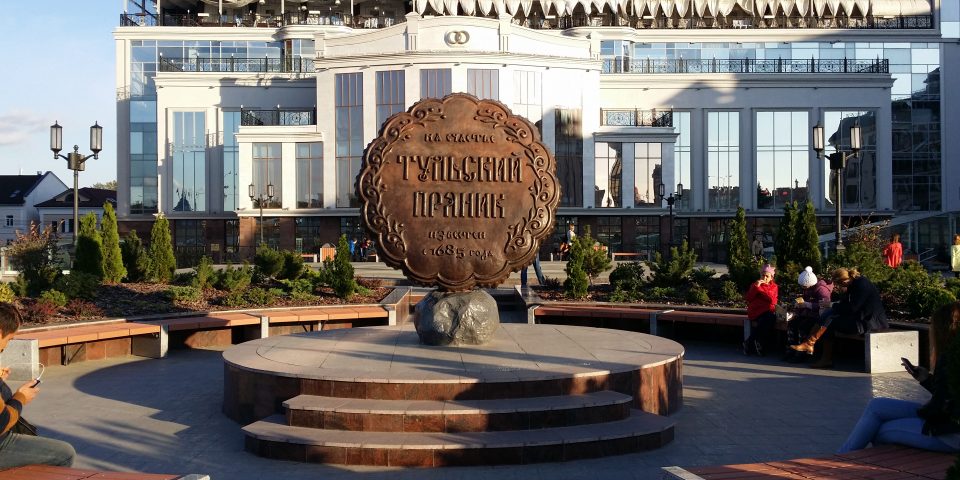
Tula is famous for its traditional Russian cookies made with honey and gingerbread – pryaniki. It is also a large production center of samovars. In Russia there is even a well-known proverb “You don’t take a samovar to Tula”.